
"Turn waste into treasure" : CO2 can also be made into recyclable plastics!
2023-11-18
Chemists at the University of Liege in Belgium have reportedly developed a new polyurethane production technique that uses carbon dioxide to make a new type of plastic that can be easily recycled, produced using more sustainable materials with similar properties to traditional petroleum-derived plastics.
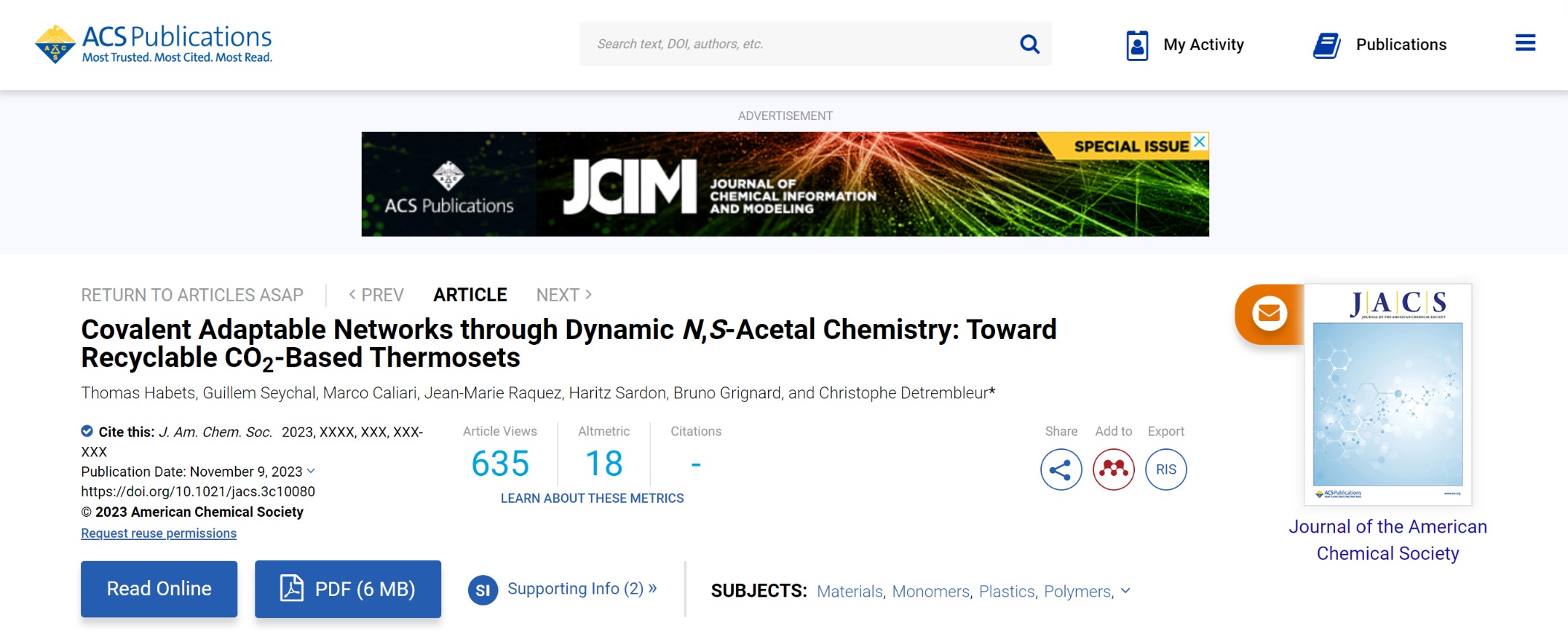
This new technology is said to be emerging as a potential solution for developing sustainable plastics with a wide range of properties that can easily meet the needs of most of our everyday applications. The latest results were recently published in the Journal of the American Chemical Society.
Commodity plastics have transformed the global industry. Whether in buildings, clothing, vehicles or food packaging, these plastics are ubiquitous in our daily lives. They are also difficult to recycle. This has led not only to the depletion of the fossil resources used to make them, but also to their long-term accumulation in nature and the oceans.
Therefore, there is an urgent need for our society to quickly design and manufacture plastics that are "easy to recycle". It is against this background that researchers have developed a new technique for producing polyurethane plastics that can be easily recycled.
It is understood that this method is characterized by the use of carbon dioxide (CO2), another source of pollution in our society, as a raw material for the production of monomers required for these new products. The structure of the monomers can be easily modified, allowing the production of plastics with a wide range of properties, from highly malleable elastomers (such as silicone) to more rigid materials (such as polystyrene).
The researchers explain that the chemical structure of these plastics resembles a three-dimensional network, rather than a long linear chain. This structure is often similar to thermosetting plastics that are difficult to recycle, making them more resistant to corrosion than plastics made from long molecular chains.
However, the polyurethanes created in the new study have new "dynamic" chemical bonds, meaning that despite their thermosetting structure, they can be reshaped through the exchange of chemical bonds under relatively mild reaction conditions.
According to the researchers, the biggest advantage of this new technology is its ability to change the performance range while offering multiple ways to recycle materials.
"These new plastics can be recycled in a number of ways, either by reshaping them with heat, by mixing different types of plastics to create hybrid materials with new properties, or by breaking them down into their constituent monomers, which is ideal for eliminating additives such as dyes or recycling composites," they added.
Finally, focusing on the industrialization of CO2 value-added in the future, this study shows that CO2 can be directly used as a chemical resource.
"It is remarkable that our material has achieved similar properties to some traditional petroleum-derived plastics," they said. This new technology is emerging as a potential solution for developing sustainable plastics with a wide range of properties that can easily meet the needs of most of our everyday applications.
Focus on foreign sustainable packaging policies and regulations, you want to know all here
